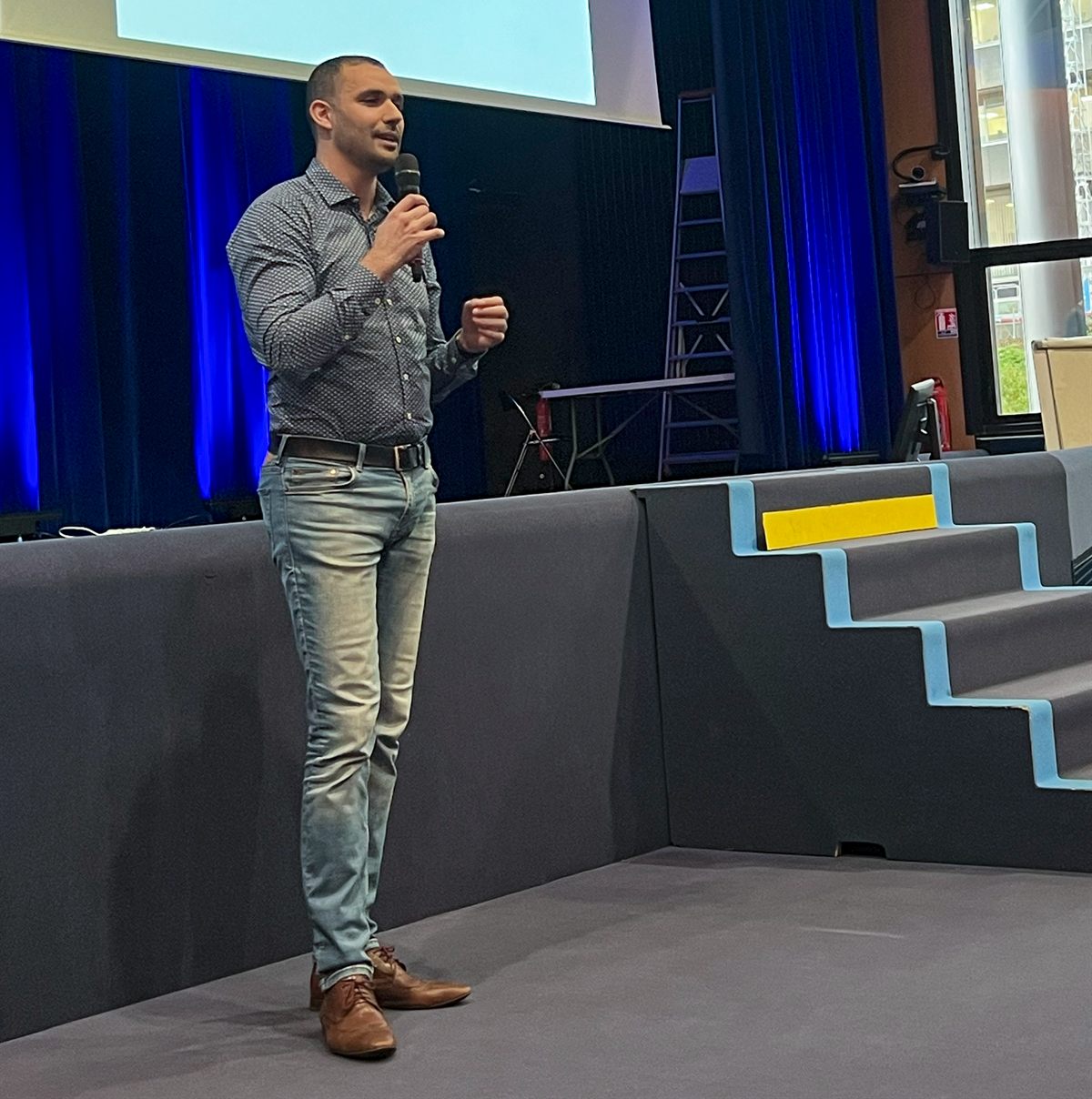
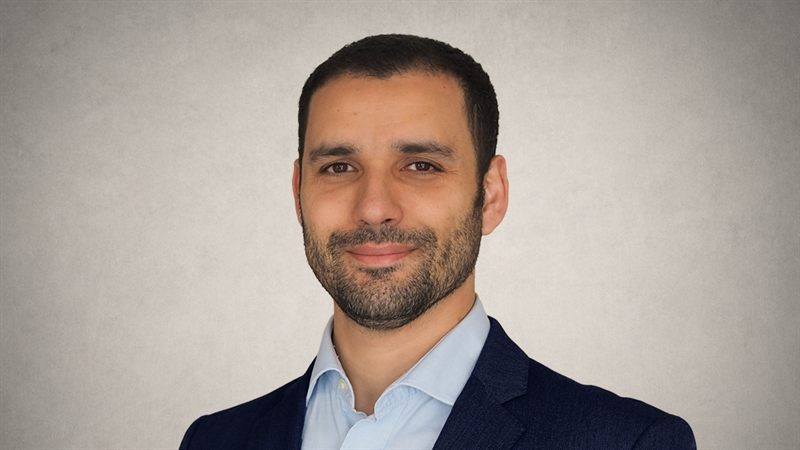
I train managers from the technical track: engineers and experts handed a team. On their real situations, not on principles: before each session, confidential interviews inside your organization to find out what is really stuck; in the room, the exact sentences to say, practice, and the debrief of what actually happened. Then I come back sixty days later to check what has changed. That is the bar I set.
Industrial, technical and engineering companies, 200 to 2,000 employees, in the Lyon region and around Paris. Their line managers almost always come from the technical track: promoted for excellence in one job, then handed another of an entirely different nature, without preparation. I come from that world; I spent ten years in it before training managers.
Recently around the table:
In-company training for groups of eight to twelve managers, in French or in English. Each session is built after confidential interviews inside your organization: we train on what is really stuck, not on a standard program.
Each module follows the same cycle: a short input, a simulation based on your situations, a debrief, an individual action plan.
The detailed program (in French)An example of what this looks like in the room. A team member misses their objective. Before acting, four causes to examine in order: was the objective clear? Do they have the means? The skill? The motivation? And the rule that follows: you do not reprimand a lack of means, you do not punish a lack of skill. Most gaps come from the first two causes; the answer then lies with the manager, not the team member.
Depending on what the interviews reveal, other areas can be worked on in the same format: stepping into the role, feedback and course correction, meetings that decide; and the two most frequently requested follow-ups after the fundamentals, team tensions and conflict, and intercultural management.
Eligible for French OPCO funding through a Qualiopi-certified partner organization.
Priced on request, after a first thirty-minute conversation.
“Very good coordination with sustained interaction with the group.”
“Many role-plays & a training adjusted to actual needs.”
“Rigorous, well-prepared, and genuinely invested in each team; a coach who pairs strategic depth with a talent for making teams think more clearly.”
A two-day session, delivered on behalf of a training organization, at an international chemical group: eight managers and future managers, all from R&D or product development, managing one to ten people, with tenures in the role ranging from a few months to several years.
What the positioning questionnaire showed beforehand: practically none of them used a structured feedback method, and more than half held one-on-ones less than once a month. The skills they felt least comfortable with: conflict management, delegation and managerial stance, in that order. Almost all worked daily with Japan; almost none had ever been trained in intercultural management.
So the session was adjusted around these points rather than delivered as planned. Participants themselves singled this out as a strength (“a training adjusted to actual needs”).
Hot evaluation, four respondents: facilitation 10/10, content 9.1/10, teaching methods 9.4/10, overall rating 4.5/5, 100 % recommendation.
One day. Five confidential forty-five-minute interviews, a systemic reading grid, a one-page synthesis that decides: is the problem one of competence, organization or management, and where to start. Debrief face to face, checkpoint at sixty days.
An industrial-site version: why defects reach the customer instead of moving up the line. Priced on request.
Six or twelve months on their real situations: the conflict that settles in, the conversation that matters, the team testing the limits. A one-hour session every two weeks, messaging between sessions with a reply within 48 business hours, one real-situation observation per quarter.
Three-way frame: objectives set together at the start, reviews at mid-point and at the end; what is said in the sessions stays confidential. Training teaches the frame; coaching installs it where it gives way: in the moment, when it counts.
I work in French and English, in France and internationally.
An engineer who spent ten years listening to systems before realizing he should be listening to the people who run them. ABB, Schneider Electric, Carrier, Mersen: everywhere, the most expensive problem was never a breakdown; it was what no one dared say in a meeting.
Since then: manager development at Tesla EMEA (500 managers trained), 1,500 students at ESSEC, ESCP and CentraleSupélec, fifteen startups coached in an incubator (SmartESA, ESA Beirut). The managers I train today come from the world I left: R&D, process engineering. I speak its language, and I know what goes unsaid there.
I write about what organizations refuse to see: why relief replaces resolution, why the best alarm signals are the people who get fired, why training that soothes is not training that transforms.
“In a performance culture, whatever cannot be measured ends up counting for nothing. Rituals, unhurried politeness, the time spent tending the relationship: we call it fat. And we try to cut it away to gain efficiency.”
The first conversation takes thirty minutes and commits you to nothing, except hearing a question nobody has asked you before.
Book 30 minutesFrançais · English · Lyon · Paris · remote